The Arc Raiders PvP Mindset: Movement, Decisions & How to Win Fights You Shouldn't
Here's something most players get wrong about Arc Raiders PvP: they treat it like a shooter.
It isn't — or at least, not primarily. The player who wins most gunfights in this game is rarely the one with the tightest aim. It's the one who made the right call at the right moment. The one who knew when to push, when to run, which corner to slide rather than walk around, and when to drop a mine instead of a grenade. Mechanical skill matters, but in Arc Raiders, decision-making is the actual weapon.
This guide is about building that decision-making instinct — covering peeking mechanics, aggression timing, and the movement tricks that give you an edge before a single shot lands.
 — Slide Peek —
The Three Peeks — And Why You're Probably Defaulting to the Wrong One
Every time you're about to round a corner on a player you know is there, you have three options. Most people use the first one almost exclusively, which is exactly why they keep dying to anvil two-shots.
The Regular Peek is the default — slow, ADS, walk around the corner. It has genuine advantages: lowest weapon spread, easier to aim while stationary. If your opponent is a poor shot, it's fine. If they're decent? You're giving them a slow-moving, predictable target at head height. Getting two-tapped by an Anvil almost always means you walked a corner. The regular peek isn't wrong, it's just overused in situations where it's the worst choice.
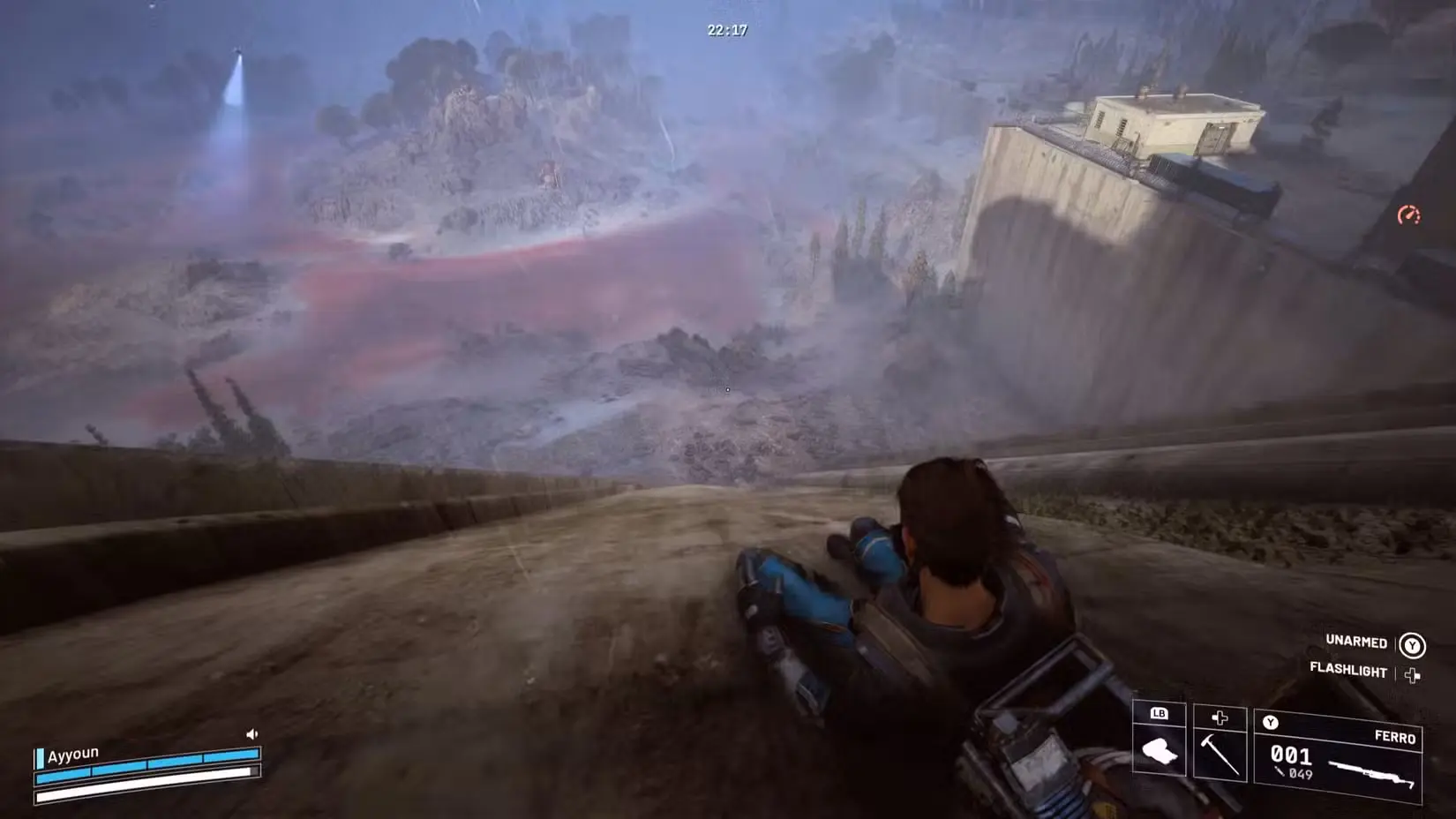
The Slide Peek is the one worth putting hours into. Sliding into an engagement makes you dramatically harder to hit — especially to headshot — and the real power move is pairing it with a reverse dodge roll the moment you've taken your shot. Slide in, fire, dodge roll backwards into cover. Done correctly, the enemy barely has time to react before you've already removed yourself from the fight. This sequence is genuinely oppressive with a shotgun. It's less effective with slow heavy weapons like the Anvil or the Feral, where the spread from movement will punish you — but for the Stitcher, the Bobcat, the Il Toro, or any close-range weapon, the slide-into-reverse-dodge is as close to a guaranteed safe aggressive play as Arc Raiders has. If there's one movement skill worth grinding in the practice range, this is it.
The Jump Peek is the misunderstood one. It looks flashy and people assume it's just for show. It's not. Jump peeking solves a specific problem: it makes headshots extremely difficult for your opponent because of the vertical movement and unpredictable trajectory. It's also surprisingly accurate — non-ADS shooting while airborne in Arc Raiders is far more reliable than players coming from other games expect, which we'll come back to later. The jump peek has a real weakness though, and it's the game's auto-climb mechanic. It has killed more jump peeks than enemies have. You go for a door jump, the game grabs a ledge 90 degrees away from your intended path, and suddenly you're vaulting over a railing into the open. Until Embark addresses auto-climb, jump peeks require knowing exactly where the geometry around you will and won't grab your character. Use it in open spaces, be cautious near ledges.
The general recommendation: default to slide peeks with the dodge roll cancel. Use jump peeks situationally when you need to avoid a headshot from a specific angle. Use regular peeks when you have cover you can immediately step back behind and time is not critical.
Knowing When to Pull the Trigger on Aggression
Arc Raiders fundamentally rewards defensive, passive play. This is worth sitting with for a moment because it runs counter to most shooter instincts. Sitting in cover, forcing your enemy to make the first mistake, and responding to their aggression is usually the higher-percentage strategy.
But passive play has a ceiling. There are moments where staying passive hands the fight to your opponent, and learning to recognise those moments is what separates average players from good ones.
The clearest trigger to go aggressive is a shield crack. The moment you hear that audio cue — the shield break sound — your opponent is at their most vulnerable. They have a brief window where their health is fully exposed before they can get a shield recharger off. If you're close enough to capitalize, that is the moment to commit. Slide peek in, dump damage, roll back. Don't overthink it. Shield crack at close range means go.
The distance caveat matters though. A shield crack at 100 metres is not a push trigger. They'll heal long before you can cover that ground. Save the aggression for close-quarters situations where a shield crack meaningfully changes the fight state.
How to Turn a Fight Around When You're Already Losing
You round a corner and take an Anvil headshot before you even registered the player. Your health is critical. What do you do?
Almost everyone's instinct is to duck behind the nearest piece of cover and heal. This is one of the most punished instincts in Arc Raiders.
A competent opponent who just cracked you hard is already pushing. They have momentum and they have the health advantage. If you stand still to heal, you get pushed into the open or you get grenaded in your cover. The wall you just hid behind is not safe — it's a coffin.
Before healing, you need to do one of two things: run or fight back. The choice between them comes down to how close the threat is and whether you know where it came from.
If you took shots from distance and you're not immediately pressured, run. Create space, break line of sight, get your shields back up somewhere they can't reach you easily. If the enemy is close — if someone just peeked into your face — fight back first. Return fire hard and fast before they commit. What you'll often find is that even a damaged player fighting back confidently will cause the attacker to hesitate and pull back to heal themselves, suddenly making it a fair fight again. You don't need to win the exchange outright. You just need to make it expensive enough for them to back off.
The trap is thinking that because you're at a disadvantage, your only job is survival. Often, controlled aggression from a disadvantaged position is what resets the fight back to even.
Two Underused Tools for Turning Fights Around
Jolt Mines as defensive tools. When you're hurt and being pushed, dropping a jolt mine on the wall beside you forces a choice on your opponent: don't push (and give you time to heal) or push and get stunned (giving you the advantage). Either outcome works in your favour. Players rarely associate jolt mines with defensive play, but that's one of their strongest applications.
The jolt mine dodge. This is more of an advanced trick than a reliable technique — the timing window is extremely tight and even with practice, landing it consistently around 50% of the time is the ceiling. But: if you dodge roll at the exact right moment as a jolt mine is peaking its bounce, you can cancel the stun entirely. If you can nail this, it opens up rooms that would otherwise be suicide to enter. The practice range is the place to work on this — place a mine, shoot it, and work on that dodge roll timing.
The Step-Up Mechanic Nobody Talks About
This one is small but situationally useful. Any object at or below waist height on your character won't trigger a full vault animation — your character simply steps up onto it. Objects at waist height or above send you into a full vault that carries you over to the other side.
Why does this matter? In places like the bridge in Buried City, you might be trying to get on top of a low ledge to get a better angle downward on an enemy. The instinct is to not try because you assume you'll vault over and expose yourself. You won't. Anything low enough will just give you the elevated position you want without launching you into danger. Worth knowing whenever you're looking for a high-ground edge in close-quarters situations.
The One Fight Worth Avoiding Entirely
Long-distance heal-trading is a trap that both teams fall into. You see them, they see you, shots are exchanged at distance, shields drop on both sides, everyone heals, and it starts again. This happens constantly in Arc Raiders and it wastes everything: shields, bandages, ammo, and crucially — it broadcasts your position to every other team on the map.
Even if you knock someone at that range, you cannot capitalise on it. They'll be revived before you cover the distance. You gain nothing, and you leave yourself depleted going into whatever fight comes next.
If a raider is taking long-range pot shots at you from 100 metres away, ignore them and move. They're not a threat from there. They're just reacting to seeing players and firing without a plan. The players who actually win fights are the ones who choose those fights deliberately — not the ones who engage every raider they can see.
This guide covers movement and decision-making. For weapon damage values, how to see through smoke, and the in-game mechanics most players don't know exist, check out our companion piece: Arc Raiders PvP — Hidden Mechanics, Weapon Secrets & The Utility Edge.